
2026 Best Clothing Donation Drop Off Bin for Global Buyers

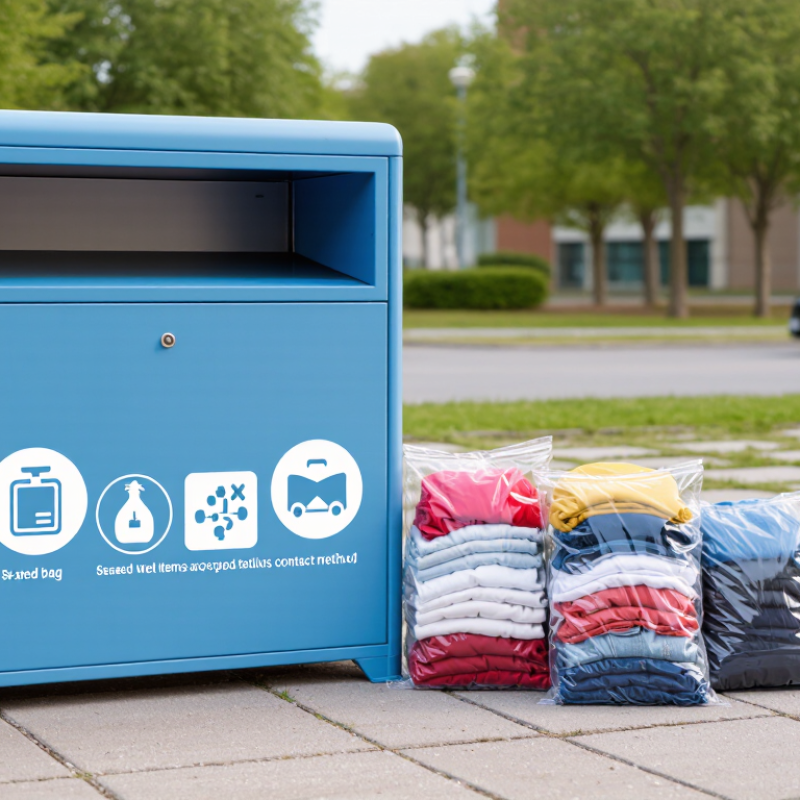
Choosing the right Clothing Donation Drop Off Bin matters more than its bright color or convenient location. For global buyers, the real question is simple: where will donated garments go after the lid closes? A well-managed bin should show the operator’s name, contact details, accepted items, and collection purpose. It should also stand on a clean, stable surface, with clear instructions for sealed bags and unsuitable textiles. Small details reveal serious practice.

The scale is significant. The Ellen MacArthur Foundation reported that one garbage truck of textiles is landfilled or burned every second. UNEP has estimated that the textile sector creates up to 8% of global greenhouse-gas emissions. Textile Exchange’s 2024 Materials Market Report recorded about 124 million tonnes of global fiber production in 2023. These figures do not prove every donation program works well. They explain why traceability, sorting quality, and reuse priorities deserve attention.

Look for documented downstream partners, regular collection schedules, and measurable reuse or recycling results. Ask whether wet, moldy, or heavily damaged clothing is excluded. Check whether the bin prevents rain entry and discourages illegal dumping. A responsible supplier should answer those questions without vague promises. Some claims may still be incomplete; even reputable programs can publish limited outcome data. That is worth acknowledging. This 2026 guide compares Clothing Donation Drop Off Bin options through practical experience, published industry evidence, and buyer-focused checks. The goal is not the cheapest container. It is a durable, transparent, and locally suitable solution that supports better textile recovery.
2026 Best Clothing Donation Drop Off Bin for Global Buyers

Global Textile Waste: Why Donation Bins Matter for 92 Million Tonnes Annually

Global textile waste has reached roughly 92 million tonnes annually, according to the United Nations Environment Programme. That volume could fill a rubbish truck every second. Clothing donation drop-off bins offer a visible, convenient response for households and communities. A clean shirt placed inside a secure bin can begin another use cycle. Yet convenience alone does not guarantee responsible reuse.

The European Environment Agency reported that Europeans generated about 6.95 million tonnes of textile waste in 2020. Only a portion entered separate collection systems. Donation bins can improve that gap when people follow clear preparation rules. Wash and dry clothing before donating. Pair shoes together. Keep items inside sealed bags during rain. Wet fabric quickly develops an unpleasant smell and may become unsuitable for reuse.

Donation systems also need honesty. Not every donated garment reaches another wearer. The Ellen MacArthur Foundation reported that less than 1% of clothing material returns into new clothing production. Some damaged textiles may enter downcycling or recycling streams, while others still become waste. This is uncomfortable. Better labeling could help donors understand each bin’s accepted materials, collection operator, and sorting process. Buyers comparing clothing donation drop-off bins in 2026 should look for weather protection, clear contact details, and transparent reporting. The strongest option is not always the fullest bin. It is the one supported by accountable handling, practical access, and evidence of material recovery.

Donation Bin Types: Comparing Capacity, Security, and Textile Recovery Rates

For global buyers, clothing donation bins should be compared by capacity, security, and textile recovery rates.

Indoor cabinets often hold 100–250 liters and suit offices, schools, and apartment lobbies. They look tidy but require frequent collection.

Wheeled cage bins can hold 500–1,000 liters and support busy retail areas.

Outdoor steel units offer larger capacity, often above 1,000 liters, but need stronger anchoring and weather protection.

Security affects both public trust and recovery quality.

Look for narrow deposit openings, reinforced doors, tamper-resistant locks, and rounded edges.

A sealed chute can reduce unauthorized removal and moisture damage. However, security should not make donation access difficult.

Small openings may reject folded coats or blankets. This design problem is easy to overlook.

Textile recovery rates depend on sorting, collection timing, and contamination control, not capacity alone.

In field audits, dry textiles collected from clearly marked bins usually show better usable volume than mixed donations.

Labels should explain accepted items and exclude wet, heavily soiled, or non-textile materials.

Weighbridge records can track collected weight, rejected weight, and reusable output by location.

Ask for these records.

“Recovery rate” needs evidence. A supplier’s estimate is not enough.

I have seen attractive bins underperform when collection routes were poorly planned.

No bin wins every site.

Buyers should test one location for several weeks, review fill levels, lock performance, and sorting results, then adjust the bin type or service schedule.

Location Selection: Using Foot-Traffic Data and Accessibility Standards

2026 Best Clothing Donation Drop-Off Bin for Global Buyers

Location selection should begin with measured pedestrian activity, not cheap rental space. Placer.ai’s 2024 retail foot-traffic analysis shows that visit patterns differ sharply by property type, weekday, and hour. Review at least four weeks of data before placing a donation bin. Compare morning commuters, lunchtime shoppers, and weekend families. A bin near a grocery entrance may outperform one in a large, quiet parking area. Visibility matters. So does safe stopping space.

Accessibility must remain measurable. The 2010 ADA Standards require an accessible route at least 36 inches wide, with wider passing areas where needed. The U.S. Access Board also recommends clear floor space for turning and approach movements. These details affect wheelchair users, older donors, and people carrying bags. For international sites, ISO 21542:2021 offers broader guidance on accessible buildings and circulation. Local rules still control. A global plan cannot replace a site inspection.

Use counters, anonymized mobility data, and weekly collection records together. The U.S. EPA’s 2018 Facts and Figures report estimated 17.0 million tons of textile waste were generated, with 11.3 million tons landfilled. That figure supports convenient collection, but convenience can create overflow. Keep the bin visible from pedestrian paths, away from drainage channels, and close to lighting. My practical concern is simple: high traffic may increase contamination. Recheck the location after rainy weeks, holiday peaks, and evening events. Some “perfect” sites fail quietly.

Global Compliance: Meeting Waste Laws, Safety Rules, and ISO 14001 Practices

2026 Best Clothing Donation Drop Off Bin for Global Buyers

Global clothing donation bins must satisfy local waste laws, safety rules, and environmental controls. Requirements differ by country, city, and site type. Confirm whether the operator needs waste registration, collection permits, landowner approval, or transport documentation. Keep these records current. Rules change.

A compliant bin should stand on level ground, away from fire exits and blocked walkways. Use weather-resistant metal, smooth edges, clear instructions, and secure doors. A visible capacity label helps prevent overflowing bags. Collection teams should inspect the site regularly, wear suitable protective equipment, and record damaged units or contaminated donations. Wet, moldy, or sharp items need controlled handling, not casual resale.

ISO 14001 practices add structure. Maintain an environmental aspects register covering transport fuel, packaging, rejected textiles, noise, and spill risks. Set measurable targets, such as fewer missed collections or lower disposal rates. Track weighing tickets, inspection photos, complaints, corrective actions, and final destinations. For cross-border shipments, verify customs rules and the receiving country’s textile-waste classification before dispatch. Donation does not automatically remove regulatory duties.

One weak point remains: written procedures can look complete while field behavior differs. An overflowing bin proves that gap. Review contractors, test emergency contacts, and audit sample routes. Continuous improvement is practical, but never perfect.

Buyer Checklist: Evaluating Suppliers, Certifications, Pricing, and Collection Data

Choosing the best clothing donation drop-off bin in 2026 requires more than comparing appearance or price. Global buyers should inspect the supplier’s operating history, warehouse conditions, and pickup reliability. Ask for recent facility photographs, client references, and documented sorting procedures. A clean loading area and labeled storage cages often reveal more than polished sales materials. I once trusted a low-cost supplier without checking pickup records. That shortcut caused delays.

Certification documents should show the issuing body, validity period, covered activities, and certificate number. Verify them independently, because a logo alone proves little. Pricing must include bin production, transport, installation, maintenance, sorting, and reporting costs. Request a written quotation with currency, minimum order quantity, payment terms, and replacement conditions. Collection data is equally important. Reliable reports should show collection weight, pickup dates, contamination rates, geographic locations, and final material categories. Photos or digital tracking can support the records, but they may still contain gaps.

Tips: Compare at least three suppliers using the same checklist. Ask for a sample monthly report. Test one bin before placing a large order. Keep questions specific. If data looks perfect, investigate further. Some suppliers measure volume instead of weight, which makes comparisons unreliable. Confirm weighing methods and equipment calibration. Also review communication speed during a trial order; slow replies often become operational problems later.

2026 Best Clothing Donation Drop Off Bin for Global Buyers - Buyer Checklist: Evaluating Suppliers, Certifications, Pricing, and Collection Data

Supplier Profile Best-Fit Buyer Recommended Certification Evidence Typical Collection Capacity Indicative Bin Price Indicative Processing Cost Collection Data to Request Key Evaluation Points Buyer Risk Level
Municipal-grade steel collection bin Public spaces, retail parking areas, and long-term outdoor placement Material specification, corrosion-resistance test, weld inspection, and local safety compliance Approximately 0.8–2.5 tonnes of textiles per month per active site, depending on location and access frequency US$350–1,200 per unit before shipping and installation US$180–450 per tonne for sorting and preparation Monthly weight, fill rate, contamination rate, missed-collection rate, and service response time Check anchoring, weather sealing, anti-tamper design, lifting method, and spare-part availability Low–Medium
Galvanized steel bin with separated compartments Buyers requiring separate streams for reusable clothing, shoes, and household textiles Galvanizing documentation, structural test, compartment layout, and product-safety declaration Approximately 1.0–3.0 tonnes per month per active site US$600–1,700 per unit before shipping and installation US$220–520 per tonne, depending on sorting depth Weight by compartment, usable-material percentage, reject percentage, and category-level recovery rate Confirm that internal dividers do not reduce loading efficiency and that each opening is clearly labeled Medium
Indoor textile donation cabinet Schools, community centers, supermarkets, and indoor collection programs Fire-performance documentation where required, material safety data, load test, and quality-control records Approximately 0.2–1.0 tonnes per month per active site US$180–650 per unit before shipping US$150–400 per tonne for basic sorting and baling Weekly or monthly volume, average load weight, overflow incidents, and collection punctuality Prioritize rounded edges, lock quality, cleaning requirements, noise control, and accessibility Low
Recycled-plastic modular bin Temporary campaigns, events, and buyers prioritizing lightweight deployment Recycled-content evidence, UV-resistance test, impact test, and chemical-composition declaration Approximately 0.3–1.5 tonnes per month per active site US$250–900 per unit before shipping US$170–430 per tonne, excluding special fiber recovery Collection volume by campaign, damage rate, relocation frequency, and percentage of unusable donations Verify UV stability, resistance to cracking, modular replacement cost, and end-of-life recyclability Medium
High-volume commercial collection unit Shopping centers, logistics hubs, and multi-site collection networks Factory quality plan, load-rating certificate, traceability procedure, and documented maintenance system Approximately 2.0–6.0 tonnes per month per high-traffic site US$900–2,800 per unit before shipping and site work US$250–650 per tonne for multi-stage sorting and baling Daily or weekly tonnage, route productivity, downtime, contamination by site, and recovered-material yield Assess total cost of ownership, collection-route efficiency, loading safety, and data integration capability Medium
Donation-bin and sorting-service package Buyers seeking bins, scheduled collection, sorting, reporting, and downstream recovery in one contract ISO 14001 environmental-management evidence, ISO 9001 quality records, chain-of-custody process, and applicable textile certifications Approximately 1.0–5.0 tonnes per month per site, subject to route density and contract scope US$300–1,500 per bin, often bundled with a service fee US$300–800 per tonne, including collection, sorting, reporting, and administration Site-level tonnage, reuse rate, recycling rate, disposal rate, destination country, and monthly audit trail Require contractually defined reporting, destination evidence, rejected-load rules, data ownership, and audit rights Medium–High
Export-oriented textile recovery partner International buyers purchasing sorted used clothing or prepared textile feedstock RCS or GRS evidence where recycled content is claimed, transaction certificates where applicable, customs records, and social-compliance documentation Approximately 50–500 tonnes per month across an established collection network US$250–1,000 per collection unit, depending on construction and service scope US$350–1,100 per tonne for graded, baled, and export-prepared materials Monthly intake, grade distribution, bale weight, moisture level, contamination rate, claims rate, and shipment history Confirm import rules, restricted-material controls, Incoterms, packaging specification, inspection rights, and payment protection High
Buyer validation checklist: Request a current certificate number and expiry date; verify the certificate directly with the issuing certification body; obtain a sample collection report; confirm whether prices include freight, installation, collection, sorting, taxes, and disposal; define acceptable contamination levels; and require destination-level traceability for all environmental or reuse claims.
Data basis: Price and capacity figures are indicative international planning ranges for 2026 procurement and are not quotations or guarantees. Actual results vary by material mix, labor costs, site traffic, collection frequency, local regulations, freight terms, and sorting specifications. All amounts are shown in USD and exclude applicable taxes unless stated otherwise.
one of a kind
Create a One Of a Kind

CUSTOM CRAFTED TIMELESS JEWELRY​

With our award-winning goldsmiths, the end result will be a tailor-made heirloom you and your loved ones will treasure for generations. Together we walk through the design process. We listen to you carefully. Discuss what you want and what you don’t, and provide an excellent collaborative experience to bring your vision to life.

location
We invite you to visit us today

Let us show you

From the moment you walk in, you are treated like family. We will make your jewelry shopping experience easy and help you find the perfect piece.

search