
2026 Top Number Patches for Global Buyers?

For global buyers, choosing the right Number Patches in 2026 means looking beyond bright colors and low prices. A reliable patch must survive washing, shipping, storage, and repeated use. It should also match the buyer’s artwork, garment fabric, order size, and delivery schedule. Small details matter. Thread density matters. Edge finishing matters.

Textile sourcing consultant Evelyn Hart says, “A strong patch begins with clear artwork, honest sampling, and a supplier that explains limitations before production.” This principle is practical, especially for international purchasing teams comparing embroidered, woven, PVC, and printed Number Patches. Each type creates a different surface, thickness, and visual result. Embroidered numbers feel traditional and textured. Woven numbers appear sharper on fine details. PVC options offer a rubber-like finish and strong weather resistance. Printed versions can reproduce gradients, but they may require more careful handling.

This guide examines the top Number Patches for global buyers in 2026. It considers material quality, backing options, color accuracy, customization, minimum order quantities, packaging, and supplier communication. Some buyers may prefer the cheapest quotation. That choice can become expensive later. A sample may look excellent under studio lighting, yet feel stiff on a lightweight jersey. That risk deserves attention.

There is no universal winner. A sports club, workwear brand, fashion label, and school team may need different solutions. Buyers should test samples, question production claims, and review actual lead times. Perfect results are not guaranteed. Better decisions come from measurable checks, honest feedback, and careful comparison.
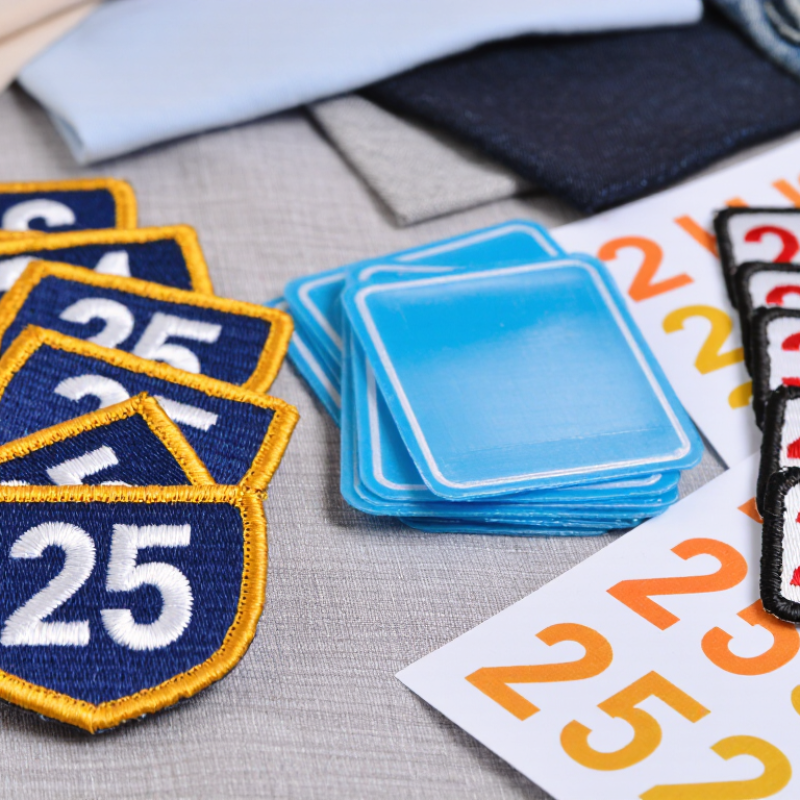
2026 Top Number Patches for Global Buyers?

What Are Number Patches and How Are They Used?

Number patches are textile or synthetic badges carrying digits, usually stitched, printed, or heat-applied. They identify team numbers, locker positions, garment sizes, or production roles. Buyers may place them on jerseys, jackets, uniforms, bags, and safety garments. A raised thread edge gives a tactile border. A merrowed edge looks cleaner but may cost more.

Selection depends on use, not appearance alone. For repeated washing, polyester thread and a tightly woven base often resist fading and fraying. For outdoor workwear, buyers should test adhesion after moisture, heat, abrasion, and twenty wash cycles. The American Association of Textile Chemists and Colorists provides standardized colorfastness methods, helping factories compare samples instead of relying on photographs. That matters. Screen colors can mislead.

Material planning also deserves attention. Textile Exchange reported global fiber production at 124 million tonnes in 2023, with projections reaching 160 million tonnes by 2030. Grand View Research estimated the global embroidery market at about USD 2.3 billion in 2023 and forecast continued growth through 2030. These figures suggest expanding decoration demand, but they do not guarantee performance. A low-cost patch may curl on a thin shirt. A dense design may feel stiff against skin. Before ordering in 2026, global buyers should confirm artwork, backing type, dimensions, stitch density, color references, packaging, and a physical wash-test sample. I would not skip that last step. A perfect-looking sample can still fail in real use.
Key Types of Number Patches Available in 2026

2026 Top Number Patches for Global Buyers?

Key Types of Number Patches Available in 2026

Number patches now combine identification, decoration, and practical customization. Embroidered patches remain popular for uniforms, sportswear, and bags. Their raised thread creates a familiar, durable surface. Woven patches show finer numbers and cleaner edges. They work better for small text and detailed layouts. PVC and rubber patches resist light rain, scuffs, and repeated handling. Their firm texture suits outdoor clothing and equipment. Printed patches offer flexible colors and gradients, but their surface may fade faster under strong sunlight. Reflective patches improve visibility in dim conditions. They should still support, not replace, proper safety equipment.

Attachment style also affects performance. Sew-on patches provide reliable long-term use. Hook-and-loop backing supports frequent removal and repositioning. Heat-transfer patches create a smooth finish, but fabric temperature limits require careful testing. Chenille patches add a soft, bold appearance, although fine numbers can lose clarity. In my experience, buyers often focus on appearance first. That can be a costly mistake. A visually perfect sample may feel too heavy, peel at the corners, or shrink after washing. Requesting material details, thread density, backing specifications, and wash-test results improves purchasing reliability.

Tips: Match the patch to its fabric and working environment. Test one sample after washing, stretching, and light exposure. Check number readability from two meters away. Confirm dimensions in millimeters, not only in images. Small differences matter. Leave room for revision.

How to Compare Materials, Designs, and Manufacturing Quality

2026 Top Number Patches for Global Buyers?

How to Compare Materials, Designs, and Manufacturing Quality

Choosing number patches requires more than matching a color chart. Embroidered patches offer texture and a traditional sports appearance. Woven patches show sharper numbers, especially at smaller sizes. PVC patches resist moisture and keep their shape, but they may feel less flexible on lightweight fabric. Check the base material, thread density, backing type, and edge finish together. A smooth merrowed edge can prevent fraying around curved numbers.

Design accuracy affects both appearance and production cost. Confirm the exact font, height, spacing, and color references before sampling. Fine strokes may close after stitching. Metallic thread can also look different under indoor lighting. Request a physical sample, not only a digital mockup. Small errors become obvious when several patches sit side by side.

Manufacturing quality needs measurable checks. Ask for wash testing, colorfastness information, attachment strength, and dimensional tolerance. A dependable manufacturer should record these results by production batch. Inspect the number’s center alignment and the backing’s coverage. I would not trust a perfect catalog image alone. In production reviews, overlooked thread tension often creates loose loops or uneven surfaces. Even experienced buyers can miss this detail. A practical inspection under bright light can reveal weak stitching, rough edges, or color variation. Supplier communication matters too, especially when specifications cross languages and time zones.

2026 Top Number Patches for Global Buyers: Materials, Designs, and Manufacturing Quality

Representative midpoint values from commonly published engineering ranges for flexible PVC, TPU, and silicone patch materials. Actual performance depends on formulation, additives, mold design, curing, and quality control.

How to read the comparison: TPU generally offers the strongest combination of thin construction, flexibility, tensile strength, and fine-detail reproduction. Flexible PVC is widely used for durable raised designs, while silicone provides a soft hand feel and high flexibility but typically has lower tensile strength. For global purchasing, also verify color consistency, edge definition, thickness tolerance, adhesion, curing quality, weather resistance, and sample approval before mass production.

Top Number Patch Suppliers for Global Buyers in 2026

Top Number Patch Suppliers for Global Buyers in 2026

Global buyers are seeking number patch suppliers with stable quality, clear sampling, and dependable delivery. Grand View Research valued the global custom T-shirt printing market at USD 4.31 billion in 2023. It also forecasts an 11.1% annual growth rate from 2024 to 2030. This wider demand supports continued interest in customized sportswear and uniform patches.

Material choice matters. The Textile Exchange Materials Market Report 2024 states that polyester represented about 57% of global fiber production in 2022. Polyester patches offer sharp edges, strong color retention, and practical washing performance. However, recycled content claims need verification. Ask suppliers for fiber documentation, colorfastness results, and production samples. Do not rely on catalog photos alone.

Small details reveal supplier experience. Check stitch density, backing adhesion, thread tension, and edge cutting under bright light. A reliable supplier should explain minimum order quantities, sample charges, packaging, and export documents clearly. Buyers should also test patches after repeated washing and heat exposure. One sample can look excellent. A larger batch may differ. That risk deserves attention.

Intertek’s textile testing guidance emphasizes controlled color, dimensional stability, and durability checks for finished products. Global buyers should request inspection records before shipment. Delivery speed is useful, but repeatable quality matters more. The best supplier is not always the cheapest. Sometimes, a slower approval process prevents costly replacement orders.

What to Check Before Ordering Number Patches Internationally

2026 Top Number Patches for Global Buyers?

Before ordering number patches internationally, verify the specification line by line. Confirm patch width, height, thread colors, border style, backing, and attachment method. A two-millimeter change can affect placement on uniforms or bags. Ask for a physical sample, not only a digital mock-up. Computer previews often hide thread density and edge distortion.

The ISO Survey 2023 recorded 1,265,216 ISO 9001 certificates worldwide. This does not guarantee perfect patch production, but it supports checking a supplier’s quality system. Request recent inspection photos, production tolerances, and a documented replacement policy. The WTO World Trade Statistical Review 2024 reported a 1.2% decline in global merchandise trade volume during 2023. Shipping delays and changing freight costs remain realistic risks. I have found that buyers often focus on unit price first. That can be an expensive mistake.

Tips: Compare at least three written quotations. Check minimum order quantities, sample fees, production time, packaging, and Incoterms. Confirm the commodity code with a qualified customs professional. Keep all artwork in vector format, and approve thread colors using physical references. Request pre-shipment photos with a ruler beside the patches. Recheck every number. Mistakes are easy to miss.

2026 Top Number Patches for Global Buyers? - What to Check Before Ordering Number Patches Internationally

Patch construction Best use for number patches Typical thickness Number visibility Common attachment Durability considerations International ordering check
Embroidered twill Sports uniforms, workwear, team apparel Approximately 1.5–3.0 mm, depending on backing and thread coverage High contrast and textured; suitable for large digits Sew-on, iron-on, or hook-and-loop backing Check edge stitching, thread density, backing adhesion, and resistance to repeated washing Confirm finished size in millimetres, digit height, border width, backing type, and care instructions
Woven fabric Small numbers, fine lettering, lightweight garments Approximately 0.5–1.5 mm Very good for fine lines and compact digits Sew-on, heat-seal, or adhesive backing Usually flexible; thin edges may fray if not overlocked or laser-cut Request a pre-production sample to verify legibility at the actual ordered size
PVC molded Outdoor uniforms, bags, footwear, tactical-style apparel Approximately 2.0–4.0 mm Excellent raised or recessed digit definition Sew-on or molded hook-and-loop backing Water-resistant and abrasion-resistant; flexibility varies with formulation and temperature Confirm material composition, odor requirements, temperature limits, and destination-market chemical rules
Woven or embroidered reflective Safety clothing, cycling garments, night-use equipment Approximately 0.8–2.5 mm Good daytime contrast with enhanced visibility when illuminated Sew-on or heat-seal backing Reflective performance can decline through abrasion, incorrect washing, or surface contamination Do not describe the patch as certified safety equipment unless the complete product has passed the relevant local standard
Printed fabric Full-colour numbers, gradients, photographs, short production runs Approximately 0.3–1.0 mm Excellent for complex artwork; clarity depends on print resolution Sew-on, heat-seal, or adhesive backing Verify colourfastness, edge sealing, and resistance to washing and rubbing Use a colour reference or approved physical sample; digital screen colours are not a reliable production reference
Chenille Varsity jackets, fashion apparel, large decorative digits Approximately 3.0–8.0 mm Bold, high-impact appearance; small digits may lose detail Primarily sew-on Heavier and more dimensional; confirm garment support and storage conditions Check packed volume, dimensional weight, and whether the receiving garment can support the patch weight
Heat-seal transfer number Direct application to jerseys and smooth synthetic fabrics Approximately 0.1–0.5 mm Very clear, flat digits with clean edges Heat application; not a separate sew-on patch Application temperature, pressure, dwell time, and fabric finish directly affect adhesion Request tested application settings for the exact fabric and confirm compatibility with coatings, waterproofing, and recycled fibres
Hook-and-loop number panel Interchangeable identification systems and uniforms Approximately 1.5–4.0 mm including the fastening system High visibility when digit height and contrast are sufficient Hook-and-loop fastening Repeated removal can wear the loop fabric and catch lint or loose fibres Confirm hook/loop orientation, panel dimensions, pull strength, and compatibility with the receiving garment
Pre-order checklist: Confirm the number sequence, artwork scale, digit height, finished dimensions, tolerance, colours, material composition, backing, attachment method, sample approval, packaging, care instructions, total quantity, lead time, shipping terms, customs documentation, and destination-country product requirements. Typical dimensions and thicknesses above are indicative ranges and should be verified with a physical sample before bulk production.

Article Source:

one of a kind
Create a One Of a Kind

CUSTOM CRAFTED TIMELESS JEWELRY​

With our award-winning goldsmiths, the end result will be a tailor-made heirloom you and your loved ones will treasure for generations. Together we walk through the design process. We listen to you carefully. Discuss what you want and what you don’t, and provide an excellent collaborative experience to bring your vision to life.

location
We invite you to visit us today

Let us show you

From the moment you walk in, you are treated like family. We will make your jewelry shopping experience easy and help you find the perfect piece.

search