China Best Womens Swimwear Manufacturers?
China has become a major sourcing base for Womens Swimwear, supported by mature textile supply chains, skilled sewing labor, and extensive export experience. Grand View Research estimated the global swimwear market at approximately USD 20.85 billion in 2023, with continued growth expected through 2030. This expansion increases buyer demand for dependable Chinese manufacturers, not merely low prices.
Quality differences remain significant.
A capable factory should demonstrate fabric knowledge, pattern development, colorfastness control, and stable production capacity. Materials such as recycled nylon, chlorine-resistant elastane, and UPF-rated fabrics require documented testing, not attractive claims alone. The Textile Exchange Preferred Fiber & Materials Market Report also shows rising industry attention toward recycled fibers and traceable sourcing. Buyers should therefore examine supplier audits, sample consistency, laboratory reports, and order lead times before selecting among China’s best Womens Swimwear manufacturers.
Production details reveal practical competence. Ask whether the factory can maintain matching prints across bikini panels, reinforce high-tension seams, and package garments without crushing molded cups. These small points affect returns and customer reviews. Certifications can help, but certificates do not replace factory visits, inspection records, or clear communication. No manufacturer is perfect. Even experienced suppliers may face fabric delays, sample revisions, or seasonal capacity pressure. A realistic assessment should compare strengths, risks, minimum order quantities, customization ability, and after-sales support. This approach follows E-E-A-T principles by combining industry evidence, manufacturing experience, technical verification, and transparent judgment. The best partner is not always the largest factory; it is the one that repeatedly delivers the required fit, finish, compliance documentation, and shipment accuracy.
What Defines a Leading Women’s Swimwear Manufacturer in China
China Best Womens Swimwear Manufacturers?
What Defines a Leading Women’s Swimwear Manufacturer in China
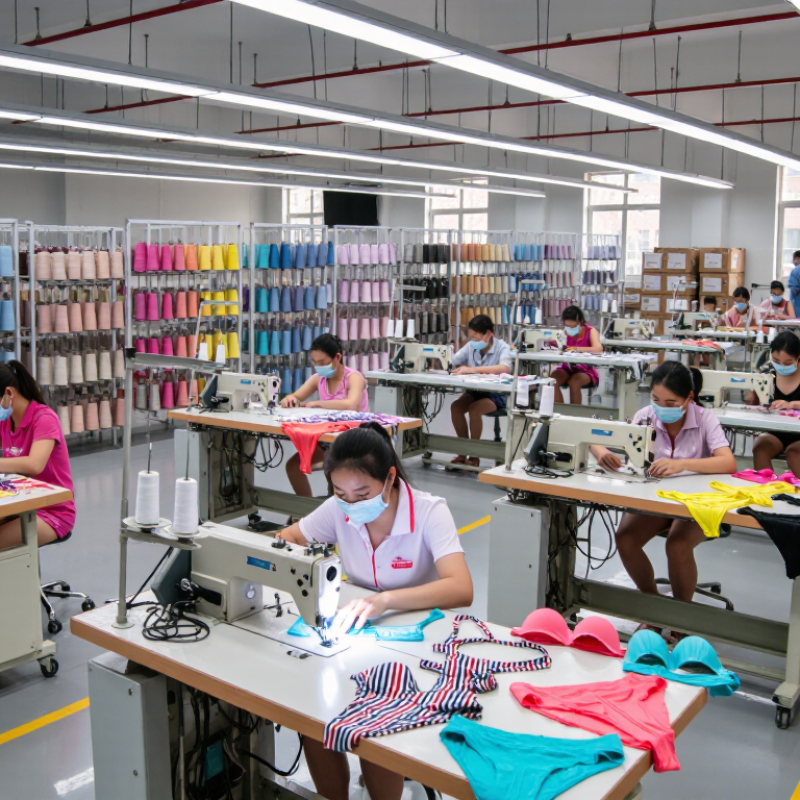
A leading women’s swimwear manufacturer combines technical skill with dependable communication. The factory should understand fit, support, coverage, and movement, not just sewing. During a factory visit, buyers should inspect sample rooms, cutting tables, and final inspection areas. Small details matter. Evenly matched prints, secure straps, and smooth seams reveal production discipline.
Fabric knowledge is equally important. Experienced manufacturers can explain chlorine resistance, colorfastness, stretch recovery, and UV protection without making vague promises. They should provide test reports and clear material records. A reliable team also checks fabric width before cutting. This reduces waste and prevents unexpected shade differences between panels. These practical steps show professional control.
Quality systems must continue beyond the first sample. Leading factories use size charts, measurement checks, inline inspections, and finished-garment reviews. They can trace production batches and respond quickly when defects appear. Ethical working conditions and lawful operations also support long-term reliability. No factory gets every sample right. That is normal. The important point is whether the team admits problems and corrects them with evidence. I would question any manufacturer that avoids detailed timelines, testing records, or direct answers. Clear communication often matters more than a polished showroom. A capable partner listens to fitting feedback, adjusts patterns carefully, and keeps production records that buyers can review.
Key Production Regions and Manufacturing Capabilities
China Best Womens Swimwear Manufacturers?
China’s strongest women’s swimwear regions serve different production needs. Fujian, especially Jinjiang, supports high-volume activewear with warp knitting, bonded seams, and chlorine-resistant fabrics. Guangdong, including Shantou, offers flexible small-batch production and dense accessory supply. Xingcheng in Liaoning is known for concentrated swimwear workshops and fast sampling. Zhejiang adds fabric trading, printing, and export coordination.
According to UN Comtrade data, China remained a leading exporter under HS 611241, covering women’s synthetic-fiber swimwear, in recent reporting years. Grand View Research estimates the global swimwear market will grow at roughly 4% annually through 2030. This growth rewards factories with digital pattern systems, four-way stretch testing, and reliable color control. Production scale alone is not enough.
Tips: Ask for fabric test reports, seam-strength results, and wash samples. Verify whether the factory performs cutting and sewing internally. Review three sample rounds, not one. Request recent audit records and production photographs. Small details matter.
Recycled polyester is becoming more common. Textile Exchange reported that recycled polyester represented about 14% of global polyester production in 2022. However, recycled content does not automatically prove better durability. That assumption needs testing. Buyers should compare fabric recovery, lining stability, and UV performance before selecting a manufacturing region. A capable supplier should explain weaknesses clearly, not only display polished samples.
How to Evaluate Quality, Materials, and Product Design
Choosing among China’s best womens swimwear manufacturers requires more than comparing factory prices. Quality begins with practical evidence. Request recent production samples, not only polished catalog photos. Check seam tension, lining coverage, elastic recovery, and stitching around the leg openings. A swimsuit should remain stable after repeated stretching and washing. I once found a beautiful sample with weak strap attachments. It looked impressive, but it was not production-ready.
Materials reveal a manufacturer’s technical knowledge. Ask whether the fabric includes recycled fibers, chlorine-resistant yarns, or UV-protective performance. Request fabric composition, weight, colorfastness, and shrinkage data. Product design also deserves close review. Test adjustable straps, removable pads, closures, and size grading on different body shapes. A design may look elegant on a sketch but feel restrictive in motion. That gap matters. Manufacturers should explain their testing methods and accept reasonable revisions. Still, buyers should avoid trusting every technical claim without documentation.
Tips: Compare at least three sample rounds. Keep a written measurement chart. Inspect stitching under bright light. Ask for wash-test results. Visit the production site when possible, or use an independent inspection service. Do not judge quality from price alone. A cheaper swimsuit can create higher return costs later. Some decisions remain imperfect, especially when fashion trends change quickly. Review customer feedback and factory communication together. Reliable partners answer clearly, admit limitations, and correct problems before shipment.
Private Label, Customization, and Minimum Order Options
China Best Women's Swimwear Manufacturers?
Private Label, Customization, and Minimum Order Options
Finding a suitable Chinese swimwear manufacturer starts with practical verification. A reliable supplier should explain fabric composition, size grading, production capacity, and quality controls clearly. Ask for recent product samples, not only digital photos. Check stitching, lining coverage, strap strength, and color consistency under bright light. Small details matter.
Private label production can include sewn-in labels, printed care tags, custom packaging, and branded size charts. Customization may also cover fabric colors, hardware, waist shapes, and modesty panels. Share technical drawings with measurements and tolerance limits. Vague instructions often create expensive corrections. A first sample may still need adjustment.
Minimum order quantities differ by fabric, color, and construction. Some factories accept lower quantities for existing patterns, while custom fabric usually requires more units. Request separate MOQs for each color and size range. Confirm sample fees, revision limits, payment stages, lead times, and inspection procedures in writing. It is wise to test a small production run before scaling. I would not treat the lowest quotation as the safest choice. A cheaper unit price can hide weak elastic, inconsistent sizing, or delayed delivery. Verify business documents and test reports independently, especially when selling in regulated markets.
Private-label swimwear usually requires a higher minimum order than ready-stock products because labels, packaging, fabric sourcing, and pattern development add production steps. The quantities shown are practical industry reference points and may vary by fabric, design complexity, size range, and supplier capacity.
How to Select the Right Chinese Swimwear Manufacturing Partner
Choosing a Chinese swimwear manufacturing partner requires more than comparing quoted prices. Start with product fit. Ask for recent samples using your fabric weight, lining, elastic, and size chart. Check stitch density, seam recovery, color consistency, and cup placement after washing. A polished sample can still hide weak production controls. Request a small pilot run before committing to larger volumes. This exposes problems early.
A reliable supplier should explain its development process clearly. Ask who approves patterns, how measurements are recorded, and when quality inspections occur. Review material traceability, production capacity, lead times, and documented inspection procedures.
Factory visits or live video walkthroughs can reveal cutting-room organization, storage conditions, and worker safety practices. Do not rely on certificates alone. Verify current documents and compare them with observed operations. Keep communication written, especially for tolerances, packaging, labeling, and delivery terms.
Experience matters during fit revisions. A capable technical team can explain why a leg opening twists or why chlorine-resistant fabric loses shape. Ask for corrective-action records, not only promises. Small details matter. Confirm sample approval gates and defect limits in writing.
Unusually low quotes may exclude testing, pattern work, or secure packaging. We once underestimated color approval time, and production moved slower than expected. That mistake taught us to leave space for revisions.
The right partner is not always the largest factory. It is the one that documents decisions, reports problems early, and repeats approved quality consistently.