
How to Choose a Reliable Luggage Manufacturer in 2026

Choosing a reliable luggage manufacturer in 2026 requires more than comparing prices and glossy product photos. A trustworthy supplier must prove its experience through consistent production, tested materials, and clear communication. Look closely at zipper strength, wheel rotation, handle stability, stitching density, and shell recovery after impact. These details matter when a suitcase moves across airport floors, hotel corridors, and uneven sidewalks.

Bob Plath, inventor of the Rollaboard suitcase, is often credited with saying, “The bag should work for the traveler, not the other way around.” That principle still matters. A capable luggage manufacturer should design around real travel habits, not temporary fashion. Ask for factory videos, sample reports, material specifications, and recent client references. Confirm whether the same factory can maintain quality across small and large orders. One impressive sample proves little.

Experience helps.

In 2026, buyers should also examine sustainability records, production flexibility, inspection procedures, and after-sales support. Recycled fabric sounds convincing, but its source and durability need verification. A factory may promise low defect rates, yet independent inspections can reveal weak seams or uneven assembly. This is where judgment becomes difficult. No manufacturer is perfect, and even experienced buyers can overlook hidden risks. The goal is not to find the cheapest supplier. It is to find a dependable partner that accepts questions, documents its claims, and improves when problems appear.
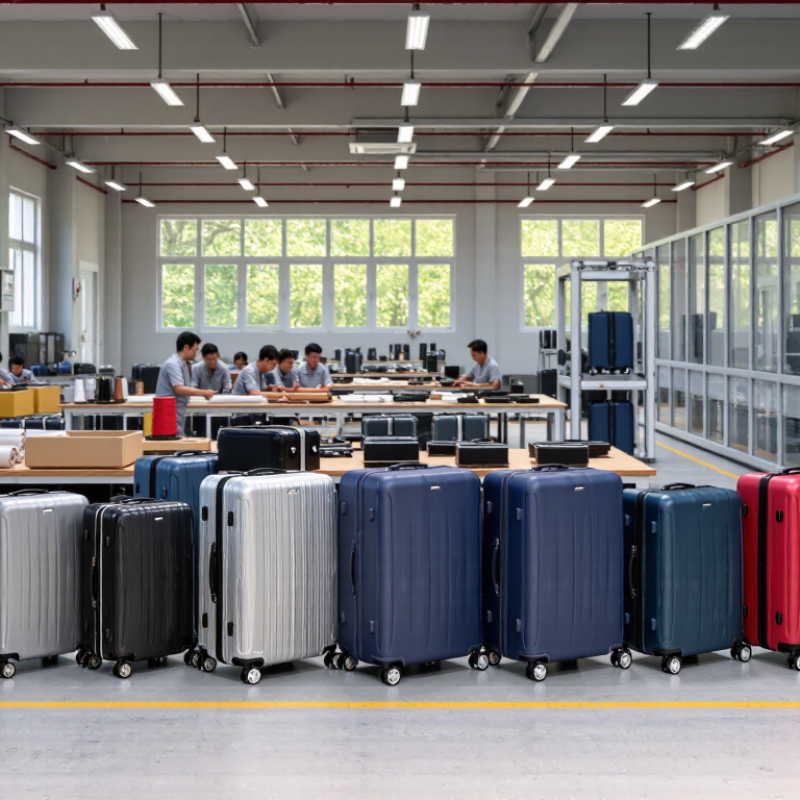
How to Choose a Reliable Luggage Manufacturer in 2026

Defining What Makes a Luggage Manufacturer Reliable in 2026

How to Choose a Reliable Luggage Manufacturer in 2026

A reliable luggage manufacturer proves consistency, not just attractive samples. Its factory should provide clear material records, testing reports, and production photos. Ask how it controls shell thickness, wheel alignment, zipper strength, and handle movement. Small defects become expensive complaints.

Look for traceability at every stage. A responsible supplier can identify resin batches, fabric sources, inspection dates, and responsible production teams. Independent quality checks are valuable, especially before shipment. During a factory visit, inspect workstations, storage areas, packing methods, and rejected units. Details matter.

Ask practical questions. What happens when materials arrive late? How are design changes documented? Can the factory repeat the same color across different production runs? A dependable team answers directly and shares problems early. That honesty is useful.

However, no manufacturer is perfect. Even experienced suppliers may miss a stitching flaw or underestimate seasonal capacity. Request a pilot order before committing to large volumes. Review the returned samples carefully, including wheels on uneven flooring and handles under repeated pressure. Sustainable materials also need verification, because vague claims can hide weak documentation. Reliability is built through evidence, communication, and the willingness to correct mistakes.
Assessing Product Quality, Materials, and Manufacturing Standards

Choosing a reliable luggage manufacturer in 2026 requires more than attractive samples. Product quality begins with repeatable materials and controlled production. Ask for material specifications, not general descriptions. Polycarbonate shells should show impact resistance and stable thickness. Polyester fabric should include denier details, coating information, and abrasion results. Check zippers, handles, wheels, stitching, and corner protection separately. Small parts often reveal weak quality control.

Request independent test reports and recent factory records. Useful evidence may include dimensional checks, drop tests, wheel-cycle tests, zipper testing, and colorfastness results. Manufacturing systems should support batch traceability and documented inspections. Certifications such as ISO 9001 can indicate process discipline, but they do not guarantee perfect luggage. Visit the facility when possible. Watch how workers measure shells, align telescopic handles, and protect finished cases from scratches. Ask how defective units are isolated. Vague answers deserve attention.

I once judged a sample too quickly because its shell looked strong. Later, the handle became loose after repeated loading. That mistake changed my review process. Now I test samples personally and compare several production batches. No audit is perfect. A factory may perform well during one visit and poorly during a busy season. Check capacity, maintenance routines, training records, and corrective-action reports. Ask for pre-shipment inspection rights and clear replacement terms. Reliable cooperation depends on evidence, honest communication, and the willingness to discuss failures before they reach customers.

Verifying Factory Experience, Certifications, and Production Capacity

How to Choose a Reliable Luggage Manufacturer in 2026

Factory experience should be verified, not assumed. Request a dated company profile, export history, and photographs of active production lines. Ask for references from comparable luggage projects. Numbers can mislead. A factory may claim 500,000 pieces monthly, yet operate only one sewing line. In a practical audit, compare this figure with workers, shifts, equipment, warehouse space, and documented orders. Request anonymized shipment records from the previous 12 months. The 2023 World Bank Logistics Performance Index assessed 139 economies, highlighting logistics reliability as a measurable supply-chain factor.

Certifications require equal attention. The ISO Survey 2022 recorded 1,265,216 ISO 9001 certificates worldwide. This scale shows the standard’s importance, but a certificate alone proves little. Check the issuing body, certificate scope, factory address, expiry date, and covered processes. ISO 9001 should support documented quality controls, including incoming material checks, stitching inspections, wheel testing, and final carton audits. Environmental or social certificates also need scope verification. A certificate for an office may not cover the production site.

Production capacity must be tested during peak periods. Ask for monthly capacity by product type, current utilization, lead-time records, and backup equipment. Request a small pilot order before signing larger commitments. Inspect unfinished samples, packed cartons, and rejected units. In my experience, a polished showroom can hide weak process control. I have also underestimated seasonal pressure. Leave room for rework, material delays, and realistic inspection time. Reliability is visible in records, not promises.

How to Choose a Reliable Luggage Manufacturer in 2026 - Verifying Factory Experience, Certifications, and Production Capacity

Evaluation Dimension Measurable Indicator Evidence to Request Practical Screening Benchmark Warning Signs
Relevant Factory Experience Years producing comparable luggage categories, such as hard-shell, soft-sided, business, travel, or children’s luggage. Production history, dated product records, sample development files, process flow charts, and references from comparable projects. Prefer at least 5 years of documented experience in the relevant product category, with recent production evidence rather than only a general trading history. The supplier cannot distinguish factory-owned operations from outsourced production or provides only undated product photographs.
Legal Factory Identity Consistency among the legal entity, manufacturing site, certificates, invoices, and bank information. Business registration, factory address, certificate scope, facility photographs, and an independent or live video audit. The production address and legal entity should match the certification documents and commercial documents, or any subcontracting should be formally disclosed. Different company names appear on certificates, quotations, contracts, and payment instructions without a documented relationship.
Quality Management Presence of documented quality procedures, incoming inspection, in-process checks, final inspection, and corrective-action records. Current ISO 9001 certificate, audit scope, inspection standards, sample inspection reports, nonconformity logs, and corrective-action evidence. ISO 9001 certification should cover the relevant manufacturing activities. Verify the certificate directly with the issuing certification body where possible. A certificate is expired, has an unrelated scope, lists another site, or is presented without verifiable certificate details.
Environmental and Worker-Safety Systems Controls for waste, chemicals, energy use, occupational hazards, emergency response, and worker training. Applicable ISO 14001 or ISO 45001 certificates, safety inspection records, chemical inventories, emergency drills, and environmental permits where required. Use certificates and audit reports as supporting evidence, but confirm that the scope covers the actual production site and relevant activities. The supplier treats a social audit, environmental audit, or self-assessment as equivalent to an accredited management-system certification.
Social Compliance Working hours, wages, age verification, freedom from forced labor, grievance procedures, and workplace conditions. Recent third-party social-audit report, corrective-action plan, payroll samples, attendance records, worker interviews, and age-verification procedures. The audit should be recent, site-specific, and supported by closed corrective actions. Audit schemes should be identified accurately rather than described as product certifications. Only a logo or one-page declaration is provided, or the audit excludes dormitories, subcontractors, or temporary workers.
Production Capacity Verified monthly output, available shifts, key equipment, labor availability, and current production load. Capacity plan, three months of production records, machine list, staffing plan, line-balance data, and current order-loading information. Capacity should be calculated from demonstrated output and available working days, with reserved capacity for quality control, maintenance, and peak-season demand. The quoted capacity is substantially higher than documented output, or the supplier relies on undisclosed subcontractors during peak periods.
Material and Product Testing Testing of wheels, handles, zippers, seams, shell impact resistance, load performance, colorfastness, and restricted substances as applicable. Product test plan, laboratory reports, material declarations, test samples, calibration records, and destination-market compliance documentation. Testing should follow agreed specifications and applicable destination-market rules. For example, chemical requirements may include REACH or CPSIA obligations depending on the market and product. Reports are for a different model or material, lack sample identification, or come from an unqualified laboratory without traceable test conditions.
Traceability and Quality Control Ability to trace materials, components, operators, inspection results, rework, and finished-goods batches. Batch codes, incoming-material records, inspection checklists, production travelers, packaging records, and shipment release procedures. Each shipment should be linked to a production batch and documented inspection results, with a defined process for quarantining nonconforming goods. Inspection is performed only at the end of production, records cannot be matched to a shipment, or defects are corrected without documented approval.
Delivery Reliability On-time delivery rate, confirmed lead time, raw-material availability, and response to schedule changes. Anonymized delivery history, production schedule, lead-time assumptions, material purchasing plan, and documented delay-contingency process. Evaluate at least several completed orders or equivalent production records; separate sample-development time, production time, inspection time, and transit time. Lead times are quoted without assumptions, delivery performance is not measured, or schedule commitments depend on unconfirmed materials.
Communication and Corrective Action Speed and accuracy of technical responses, sample revisions, root-cause analysis, and corrective-action closure. Meeting records, approved specifications, sample comments, nonconformance reports, root-cause analysis, and corrective-action deadlines. Require written specifications, an approved reference sample, measurable acceptance criteria, and documented closure of production issues before shipment. The supplier accepts every requirement verbally but avoids written specifications, sample approvals, or responsibility for recurring defects.
Verification principle: Treat certificates, audit reports, capacity figures, and test reports as evidence to be verified—not as substitutes for a factory visit, sample approval, production inspection, and contractually defined quality requirements.

Comparing Prices, Minimum Orders, Customization, and Lead Times

How to Choose a Reliable Luggage Manufacturer in 2026

Price should never stand alone. Compare written quotations from at least three manufacturers. Check materials, zippers, wheels, packaging, inspection fees, and shipping terms. A low unit price may hide costly mold charges or weak components. Request a sample before approving production. Test the handle, wheel movement, stitching, and shell recovery after pressure. Ask for proof.

Minimum order quantities often reveal a factory’s flexibility. A smaller business may need 300 pieces, while a large factory may require 1,000 or more. Negotiate a trial order with clear quality standards. However, a low MOQ can increase the unit price. That gap matters. Ask whether the quantity applies per color, size, or complete collection.

Customization needs precise communication. Provide drawings, dimensions, fabric references, color codes, logo files, and packaging details. Confirm which changes affect tooling costs. Lead times should include sampling, material purchasing, production, inspection, and shipping preparation. Request a dated schedule with approval points. A reliable manufacturer explains delays early and shares realistic capacity information. Do not guess. I would also check recent production photos, factory records, and independent inspection options. Still, documents can look perfect while actual workmanship disappoints. Build a small pilot order into the plan, even when the supplier seems experienced.

Reviewing Communication, Contracts, Samples, and After-Sales Support

How to Choose a Reliable Luggage Manufacturer in 2026

Communication reveals operational discipline.

Ask how quickly the factory answers technical questions, shares production photos, and reports delays. A reliable team names one project owner and records every change. Keep specifications precise: shell thickness, wheel material, zipper grade, logo placement, carton strength, and inspection limits. The contract should define payment stages, approved materials, delivery windows, defect percentages, spare-part duties, and remedies for rejected goods. Vague promises become expensive later.

Sample review must be practical.

Pack one case with clothing, shoes, and a laptop, then roll it over uneven concrete. Check wheel noise, handle wobble, zipper alignment, odor, and corner stress. Keep a signed “golden sample” for production comparison.

SITA’s 2024 Baggage IT Insights reported 6.9 mishandled bags per 1,000 passengers in 2023.

That figure makes wheel, handle, and shell durability more than cosmetic concerns. The sample may look excellent, yet factory consistency can still fail. This is where my own checking has sometimes been too optimistic.

Tips:

Request two samples from different batches. Record test videos. Ask for a spare-parts list before ordering. Require batch inspection photos and a written complaint timeline.

The 2024 NRF and Appriss Retail returns report estimated that 16.9% of retail sales were returned in 2024.

Clear after-sales support protects cash flow. Confirm response times, replacement procedures, repair instructions, and who pays freight. A manufacturer that discusses failures calmly is often more dependable than one offering perfect claims.

one of a kind
Create a One Of a Kind

CUSTOM CRAFTED TIMELESS JEWELRY​

With our award-winning goldsmiths, the end result will be a tailor-made heirloom you and your loved ones will treasure for generations. Together we walk through the design process. We listen to you carefully. Discuss what you want and what you don’t, and provide an excellent collaborative experience to bring your vision to life.

location
We invite you to visit us today

Let us show you

From the moment you walk in, you are treated like family. We will make your jewelry shopping experience easy and help you find the perfect piece.

search