How to Choose Cold Lamination Film in 2026?
Choosing cold lamination film in 2026 requires more than comparing prices or gloss levels. The right film must match the printed surface, application method, environment, and expected service life. A bright shop-window poster needs different protection from a floor graphic, vehicle decal, or outdoor sign. Consider film thickness, adhesive strength, surface texture, UV resistance, moisture protection, and compatibility with solvent, latex, or UV inks. Small details matter. A poor match can cause silvering, edge lifting, bubbles, or color changes within weeks.
Start with the finished application, not the product label. Check whether the graphic will face sunlight, rain, abrasion, cleaning chemicals, or frequent handling. Test a small printed sample before ordering a full roll. Apply the cold lamination film at the intended speed and pressure, then inspect it after 24 to 72 hours. Look closely at corners, dark ink areas, and textured substrates. Reliable manufacturers should provide technical data, storage guidance, recommended application temperatures, and evidence from controlled testing. Certifications can help, but they do not replace practical trials.
Experience also reveals an uncomfortable truth: no film performs perfectly everywhere. A premium product may fail on a dusty surface or poorly cured print. Even skilled installers make mistakes when production deadlines become tight. Recheck the substrate. Measure twice. For 2026, responsible buyers should also review material composition, liner waste, recyclability claims, and supplier consistency. “Eco-friendly” is not always clear. Ask for specific evidence, compare realistic performance, and choose the film that remains dependable after installation, not merely the one that looks attractive on a sample board.
What Cold Lamination Film Is and How It Works
How to Choose Cold Lamination Film in 2026?
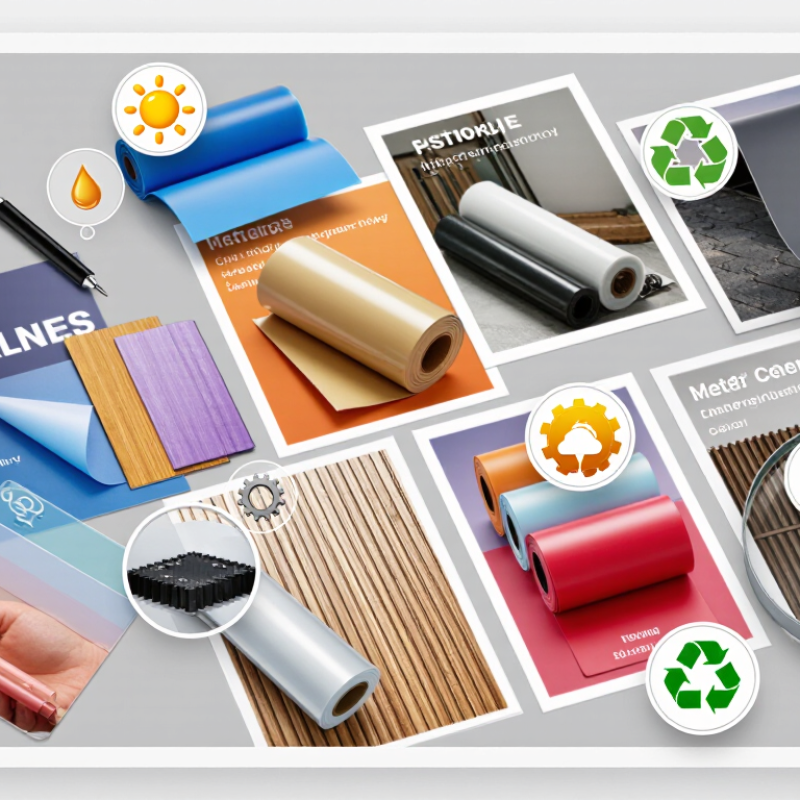
Cold lamination film is a clear plastic layer with pressure-sensitive adhesive. It protects printed graphics without heat or solvent activation. During application, the release liner is removed, and a squeegee or nip roller presses the film onto the surface. Pressure activates the adhesive. Simple, but not risk-free. Dust, uneven pressure, or excessive tension can create bubbles and silvering. Film thickness, adhesive strength, gloss level, and UV resistance should match the print, substrate, and exposure period. A matte film can reduce glare, while a gloss film usually makes colors appear sharper.
Industry data supports careful material selection. Smithers’ 2024 report on self-adhesive labels identifies continued demand for durable, digitally printed graphics and shorter production runs. FINAT’s 2024 European label report also highlights increasing job variation and flexible production requirements. These trends make easy-to-apply films valuable, especially for changing signage and indoor displays. However, a report cannot replace a real test. Outdoor performance depends on ink, substrate, edge sealing, and installation quality.
Tips: Test a small printed panel first. Apply the film at room temperature, then inspect it after 24 hours. Check adhesion on textured boards, recycled paper, and solvent-sensitive inks. For windows or bright outdoor signs, compare UV-rated films beside standard film. I still find one weakness: “water-resistant” does not always mean waterproof. Read the technical data sheet, and question vague claims.
Which Materials and Adhesives Suit Your Application
Choosing cold lamination film in 2026 starts with the substrate, not the finish. PVC remains flexible and economical for short-term graphics. PET offers better dimensional stability, clarity, and scratch resistance. Polypropylene can reduce density and improve recyclability, but it may feel less forgiving during application. The 2024 AWAreness Report on the Global Release Liner Industry identifies pressure-sensitive labelstock as a major demand segment, reinforcing the need to match film, adhesive, and liner performance together.
Adhesive selection matters more than many buyers expect. Permanent acrylic adhesives suit smooth glass, metal, and sealed boards exposed to moisture. Removable acrylic systems work better for temporary walls, retail panels, and repositioning. Water-based adhesives can support lower-emission production, yet they may lose performance on dusty or low-energy surfaces. For outdoor use, check UV stability, temperature cycling, and plasticizer migration. A film can look perfect indoors and fail after one rainy week.
Test the complete construction at the real application temperature. Measure initial tack, peel strength, edge lift, and bubble formation after 24 to 72 hours. The OECD’s Global Plastics Outlook projects plastic waste could nearly triple by 2060 without stronger policies, so material reduction and end-of-life compatibility deserve attention. Still, recyclability claims can be oversimplified. Mixed PVC, adhesive, ink, and liner structures are rarely easy to recover. Field trials often reveal more than a data sheet. Sometimes, the “best” adhesive is simply the one that removes cleanly.
How to Choose Cold Lamination Film in 2026? - Which Materials and Adhesives Suit Your Application
A practical comparison of common film substrates, adhesive systems, and application conditions
| Film Material | Typical Thickness | Optical Appearance | Flexibility and Conformability | Typical Outdoor Performance | Recommended Adhesive | Suitable Applications | Main Limitations |
PVC
(Polyvinyl Chloride) | 70–180 microns | Clear, matte, or textured; good visual depth | Good flexibility and conformability | Approximately 2–5 years, depending on formulation, printing inks, UV exposure, and installation | Permanent solvent-based or water-based acrylic for general graphics; removable acrylic for temporary signs | Indoor graphics Short- to medium-term outdoor signs Vehicle graphics Floor graphics with suitable texture | May shrink over time; less suitable where low-emission or halogen-free materials are required |
PET
(Polyester) | 23–125 microns | High clarity and gloss; strong dimensional stability | Less conformable than PVC; best on flat or gently curved surfaces | Typically 1–3 years for outdoor use unless specially engineered for extended exposure | Clear acrylic for high-clarity applications; permanent acrylic for durable bonding | Protective overlays Labels Window graphics Premium indoor prints Document protection | Can crack or lift on deep contours; relatively high stiffness may increase application difficulty |
PP
(Polypropylene) | 30–150 microns | Clear, translucent, white, gloss, or matte; good print brightness | Good flexibility with low moisture absorption | Approximately 1–3 years outdoors, subject to UV stabilizers and adhesive selection | Permanent acrylic designed for low-surface-energy plastics; removable acrylic for temporary displays | Retail graphics Packaging prototypes Posters Indoor signage Moisture-prone areas | Some grades are difficult to bond without a compatible adhesive; surface treatment may be needed |
PE
(Polyethylene) | 50–150 microns | Usually translucent or opaque; gloss and matte options available | Very flexible and suitable for soft or irregular surfaces | Generally limited to short-term outdoor use unless UV-stabilized | High-tack acrylic or rubber-based adhesive formulated for low-surface-energy substrates | Flexible packaging Temporary protection Irregular surfaces Moisture-resistant labels | Lower stiffness; bonding can be difficult because PE has low surface energy |
BOPP
(Biaxially Oriented PP) | 20–60 microns | Bright, clear, and dimensionally stable | Flexible on flat surfaces but less suitable for deep curves | Typically 1–2 years outdoors without specialized UV protection | Water-based or solvent-based acrylic; choose a permanent grade for long-term adhesion | Packaging labels Retail displays Book and document covers Indoor posters | Can curl or tunnel if adhesive coat weight and tension are poorly controlled |
| Polyolefin Blend | 50–150 microns | Clear, satin, or matte; visual quality depends on blend and coating | Good flexibility and moisture resistance | Commonly used for short- to medium-term outdoor applications when UV-stabilized | Permanent acrylic with good plasticizer resistance; removable acrylic for temporary applications | Indoor and outdoor graphics Recyclability-focused projects Moisture-exposed displays | Properties vary significantly by formulation; confirm compatibility with ink and substrate before production |
Typical values are general industry ranges. Actual performance depends on film construction, adhesive coat weight, ink system, surface preparation, climate, cleaning chemicals, and installation quality.
For flat indoor graphics Choose PET, BOPP, or standard PVC with a clear acrylic adhesive when clarity, smooth appearance, and easy handling are priorities.
For curved or textured surfaces Choose flexible PVC or PE with a high-tack acrylic adhesive. Use controlled heat only when the film manufacturer permits it.
For temporary applications Select a removable acrylic adhesive and test dwell time, residue, surface paint, and removal temperature before full-scale installation.
How to Match Film Thickness, Finish, and Surface Protection
How to Choose Cold Lamination Film in 2026?
Matching thickness, finish, and protection requires more than comparing prices. A 70–80 micron film can suit indoor posters, menus, and short-term graphics. For floor signs, transport labels, or frequently handled displays, 100–150 microns usually provides better stiffness and edge protection. However, thicker film may curl on flexible media. It can also make trimming less forgiving. According to MarketsandMarkets, the protective films market is projected to grow from over USD 30 billion in 2024, reflecting stronger demand for surface durability across printed applications. That figure is useful, but it is not a substitute for testing.
Finish changes both appearance and performance. Gloss film increases color depth and contrast, but highlights can become distracting under bright lighting. Matte film reduces glare and fingerprints, although dark images may look slightly softer. Textured finishes can disguise minor scratches, yet they may reduce fine detail. Choose a film with suitable UV resistance when graphics face windows or outdoor light. Test adhesion on the actual substrate, especially coated paper, PVC, and synthetic media.
Tips: Cut three small samples. Apply them to the real material. Check bubbles, edge lift, haze, and color shift after 24 hours. Rub each sample with a dry cloth and a damp cloth. A perfect result on day one can still fail later. Reflect on the result, not just the specification sheet.
How to Evaluate Compatibility, Durability, and Installation Needs
How to Choose Cold Lamination Film in 2026?
Compatibility should be tested before appearance. Check the film’s adhesive against the ink, coating, and substrate. Solvent residue can cause clouding or edge lift. On textured boards, a soft film may follow the surface better. On smooth graphics, harder films can resist scratches. ASTM D3359 adhesion testing and ASTM D1003 haze testing provide useful evidence. They do not replace a real installation trial.
Durability depends on exposure, not promises. Grand View Research valued the global self-adhesive labels market at about USD 48.9 billion in 2023, showing strong demand for protected printed surfaces. Smithers’ 2024 analysis also identifies digital and short-run printing as continuing growth areas. These trends increase pressure on films to handle frequent handling, moisture, and sunlight. For outdoor graphics, request UV and weathering data, preferably using ISO 4892-3 testing. I still find small failures at corners. Lab results can look perfect, while a dusty wall exposes weak adhesion.
Tips: Apply a 30-centimetre test strip first. Wait 24 hours. Inspect bubbles, silvering, curl, and edge lift. Test removal, too. A film that installs quickly may damage a delicate print later. Measure application temperature, squeegee pressure, and overlap width. Record them. This simple log makes repeated jobs more reliable, although it cannot remove every installation mistake.
How to Choose Cold Lamination Film in 2026?
Compatibility, durability, and installation benchmark by common film material
Scores use a practical 1–5 benchmark based on typical material characteristics: compatibility with common printed surfaces, resistance to abrasion and moisture, and ease of cold installation. Higher scores indicate a stronger overall fit for that evaluation area. Always confirm adhesive compatibility, surface cleanliness, expected exposure, and application temperature before production use.
How to Compare Quality, Cost, and Environmental Considerations
How to Choose Cold Lamination Film in 2026?
Choosing cold lamination film requires more than checking thickness and roll price. Quality appears during real use. Test a small sample on coated paper, posters, and textured surfaces before ordering. Look for even adhesion, clear visibility, low haze, and clean cutting. After 24 hours, inspect the edges for lifting or curling. Small details matter.
I once selected a cheaper film that looked acceptable at first. After two weeks, several corners lifted in a warm display area. The replacement cost exceeded the original savings. Compare total cost instead. Include waste, labor, reprints, storage, and application speed. A consistent adhesive can reduce bubbles and installation time. Ask for technical data, batch information, thickness tolerance, and recommended storage conditions. Reliable suppliers should provide test results, not only attractive claims.
Environmental factors deserve careful comparison. Check whether the film uses PVC, recycled content, or a recyclable liner. Ask how the adhesive affects recycling, because the surface film is only one part of the product. Lower packaging volume can also reduce transport impact. Do not assume “eco-friendly” means environmentally harmless. Documentation may be incomplete, and disposal systems differ by region. I still find this difficult to judge. A film with longer service life may prevent frequent reprinting, but it can be harder to process after use. Compare verified evidence with your actual application, not marketing language.