How to Choose a Rolling Luggage Trunk in 2026
Choosing a Rolling Luggage Trunk in 2026 is less about finding the biggest case and more about matching its design to the way you travel. A trunk-style suitcase can offer a broad opening, a structured interior, and room for bulky items. Yet those benefits matter only if the case fits your car, storage space, and airline’s current size limits. Rules can vary, so check the carrier’s published measurements before buying.
Start with the details you can test. Roll the case across a rough pavement joint and listen for rattling wheels. Pull the handle to full height; it should feel steady, not loose. Open the trunk and picture packing a jacket, shoes, and a toiletry bag. Can you reach each item without unpacking everything? Small design choices often decide that. A wide lid may make packing easier at home but awkward in a narrow hotel room.
Materials, wheel construction, zippers, and warranty terms deserve close attention, though none guarantees a trouble-free trip. Compare the empty weight with the packed weight you can realistically manage. Check whether replacement parts and repair support are clearly described. Marketing photos are tidy. Real packing is not. A case that looks perfect online may feel unwieldy on stairs or crowded train platforms, and that is worth admitting before purchase. This guide will help you weigh capacity, durability, maneuverability, and value, so you can choose a trunk that suits your travel habits rather than an idealized itinerary.
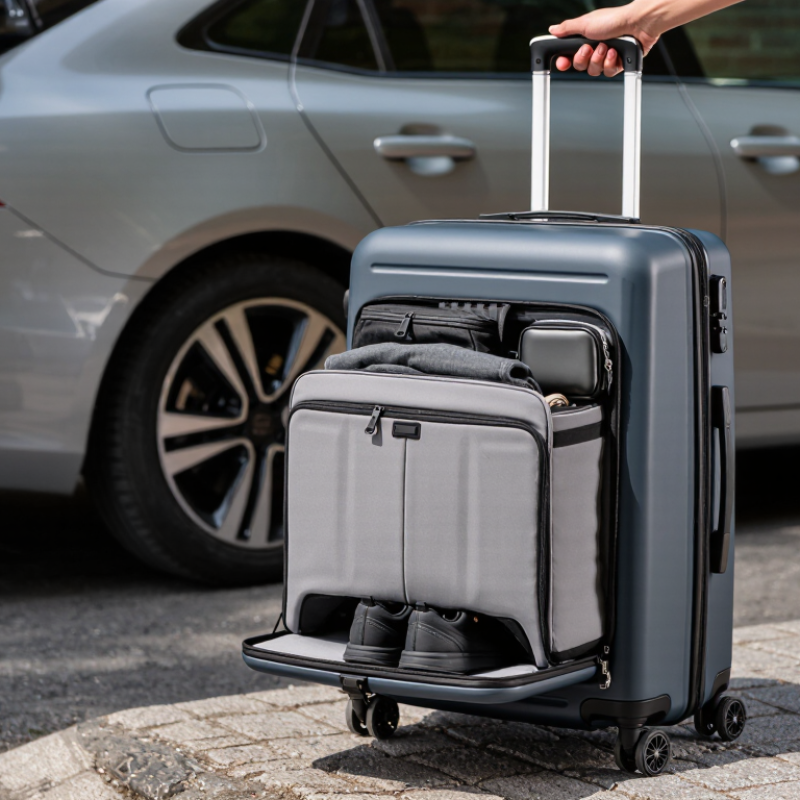
Classify Trunk Size by IATA’s 56 × 45 × 25 cm Cabin-Bag Guidance
When choosing a rolling luggage trunk in 2026, start with IATA’s 56 × 45 × 25 cm cabin-bag guidance. This size equals about 63 litres of external volume, but wheels, handles, and curved corners reduce usable space. Measure the complete trunk, not just its shell.
Classify trunks into three practical groups. Compact models stay below 55 × 40 × 20 cm and suit short business trips. Guidance-aligned trunks approach 56 × 45 × 25 cm, offering more room while remaining easier to assess at airport gates. Larger trunks exceed one or more limits and may require checking, depending on the airline. IATA notes that cabin limits can vary, so this measurement is a reference, not a universal promise.
Real-world handling also matters. SITA’s Baggage IT Insights 2024 reported 6.9 mishandled bags per 1,000 passengers in 2023. A smaller trunk may reduce awkward lifting and crowded-bin conflicts. Still, I once underestimated a thick wheel housing. It consumed valuable packing space. Check the frame, wheel position, and expansion panel before buying. Use a tape measure. Then weigh the empty trunk, because a strong shell can quietly reduce your payload.
How to Choose a Rolling Luggage Trunk in 2026 — Classify Trunk Size by IATA’s 56 × 45 × 25 cm Cabin-Bag Guidance
Measurement note: Dimensions are illustrative size-class examples, not universal category standards. Measure the case at its widest points, including wheels, handles, and other protrusions. The listed volumes are approximate external bounding-box calculations (height × width × depth) and are not usable packing capacity. IATA’s 56 × 45 × 25 cm figure is guidance; cabin-bag allowances vary by airline, aircraft, route, and fare.
Check Airline Checked-Bag Limits Before Packing to the Common 23 kg Threshold
How to Choose a Rolling Luggage Trunk in 2026
A rolling luggage trunk may look spacious, but its empty weight matters. Many checked-bag policies use a 23 kg threshold. That limit includes the trunk, wheels, handle, and everything inside. Do not treat 23 kg as your packing target. Aim for 20–21 kg instead. This leaves room for scale differences and last-minute purchases.
Airline rules can vary by route, fare type, and travel class. Check the airline’s official baggage page before choosing your trunk or packing clothes. Confirm both weight and size limits. Some carriers accept one 23 kg bag, while others combine weight across multiple bags. Oversized trunks may require extra fees, even when they are not heavy. A sturdy frame is useful, but reinforced corners can add unexpected weight. I still misjudge this sometimes.
Tips: Weigh the empty trunk first. Then pack in stages. Place shoes and dense items near the wheels for stability. Use a small luggage scale at home, and check the trunk’s dimensions with the handles closed. Keep fragile items protected, but avoid filling every corner. A half-empty trunk often rolls better and is easier to lift. Remember the scale display, not your judgment.
Verify TSA-Recognized Lock Compatibility and Warranty Coverage Before Purchase
How to Choose a Rolling Luggage Trunk in 2026
A rolling trunk needs more than thick corners and quiet wheels. Check its lock before checking its appearance. The TSA says recognized locks can be opened by authorized officers without destructive inspection. Look for the official recognition symbol, not vague wording such as “airport friendly.” Test the lock several times at home. The dial should turn cleanly, and the latch should close without force. A useful detail: photograph the lock and serial information before travel.
SITA’s 2024 Baggage IT Insights report recorded 6.9 mishandled bags per 1,000 passengers in 2023. That figure covers delayed, damaged, pilfered, and lost baggage. A strong warranty therefore matters. Read whether coverage includes the shell, wheels, handle, frame, and lock. Some policies cover manufacturing defects but exclude airline handling damage. That distinction can surprise owners.
Read the exclusions carefully.
Check the warranty period and claim process. Does service require receipts, photographs, or authorized repair? Are shipping costs included? The U.S. Federal Trade Commission advises consumers to review written warranty terms, coverage limits, and remedy options before purchase. Keep your receipt and record the trunk’s condition on day one. I once assumed a “lifetime” warranty covered every failure; it did not. Marketing language can be comfortable, but the small print decides the outcome.
How to Choose a Rolling Luggage Trunk in 2026
Verify TSA-recognized lock compatibility, checked-baggage limits, and warranty coverage before purchase.
The 158 cm figure represents the commonly used checked-baggage linear-dimension benchmark, while 23 kg is a common economy-class weight allowance. Airline rules vary, so confirm the exact policy before traveling. A TSA-recognized lock is designed to allow authorized inspection in the United States, but lock compatibility and warranty duration must be explicitly confirmed in the product documentation.