Why Choose Family Jewelers for Wholesale Jewelry?
Choosing wholesale jewelry is not only about finding the lowest price. Retailers need pieces that look consistent under bright shop lights, arrive on schedule, and match the descriptions customers receive. Family jewelers can offer a more personal buying experience, with direct conversations about materials, workmanship, sizing, and order quantities. That matters when a clasp feels too light or a stone’s color differs from the sample. Small details add up.
A trusted family jeweler may also bring years of practical knowledge to sourcing and selection. They can explain metal options, clarify gemstone descriptions, and help buyers compare pieces before committing to a larger order. Ask for clear product specifications, supplier information, sample availability, and written details about shipping or returns. Good answers should be specific, not rushed. Still, a family business is not automatically the right supplier; experience and reputation need to be checked, just as they would with any wholesaler.
Wholesale decisions affect more than inventory. They shape customer trust, repair questions, and the way a collection feels in the display case. A dependable partner can make reordering easier and help a retailer choose pieces that suit actual customer preferences. The relationship may take time to build. That part is easy to underestimate. This article explores why retailers consider family jewelers for wholesale jewelry, what practical advantages they may offer, and which questions help buyers make a careful, informed choice.
What Defines a Family-Owned Jewelry Wholesaler?
What Defines a Family-Owned Jewelry Wholesaler?
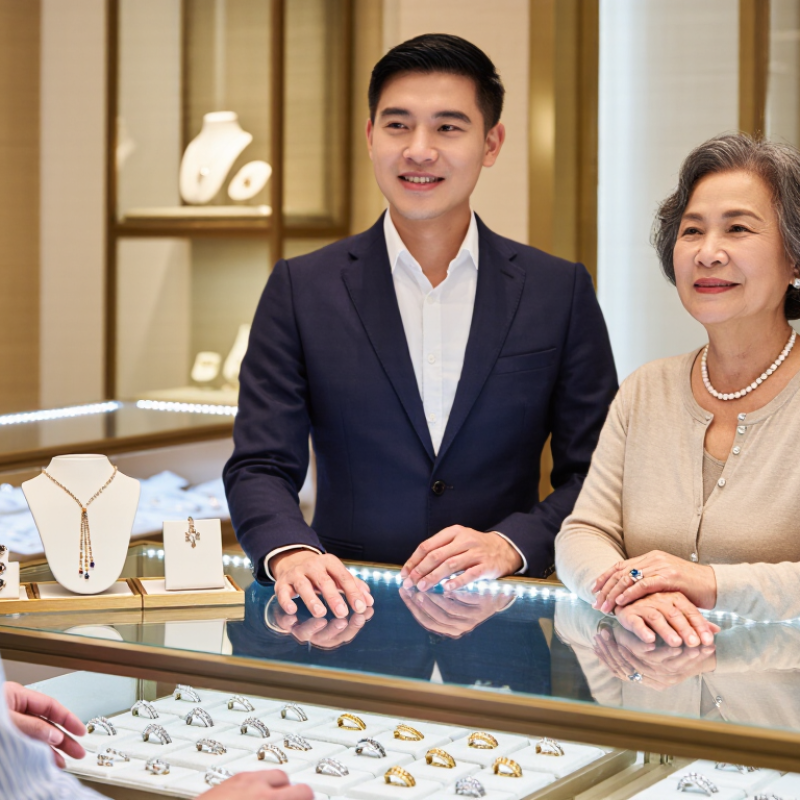
A family-owned jewelry wholesaler is shaped by more than a surname on business paperwork. Often, relatives share daily decisions, customer relationships, and responsibility for product standards. You may speak with someone who knows why a particular chain style sells well or how a clasp feels after repeated handling. That practical knowledge can make conversations more specific. It can also support steadier service when the same team manages orders over time.
Look for clear answers, not just a warm story. A reliable wholesaler should explain product materials, available quantities, inspection practices, and return terms in plain language. Ask how they handle a delayed shipment or a mismatch between a sample and a delivered piece. Family ownership is not a guarantee of quality. Some family businesses have rough processes, and some need to improve. That honesty matters. The best fit is a supplier willing to show how its work is done and address gaps without evasion.
Tips: Request a sample before placing a larger order. Check finish, weight, closures, and packaging under good light. Ask who handles follow-up questions after purchase. Notice whether answers stay consistent. A personal connection helps, but documented details protect both sides. Keep expectations realistic; even a trusted wholesaler can make an occasional mistake.
Why Choose Family Jewelers for Wholesale Jewelry? - What Defines a Family-Owned Jewelry Wholesaler?
| Evaluation Dimension | What a Family-Owned Wholesaler May Offer | What Buyers Should Verify |
|---|---|---|
| Ownership and management | A family may be involved in ownership or day-to-day management, allowing buyers to speak directly with decision-makers. | Ask who manages sales, fulfillment, and customer service, and how long the business has operated. |
| Communication | A smaller, owner-led team may provide direct communication and continuity in buyer relationships. | Confirm the available contact channels, response expectations, and process for handling order issues. |
| Product selection | Some wholesalers specialize in particular categories, materials, or price ranges; selection varies by supplier. | Request a current catalog and check available styles, sizes, materials, and minimum order quantities. |
| Product information | A wholesaler may provide details such as metal type, gemstone characteristics, dimensions, and care guidance. | Ask for written specifications and any relevant documentation before placing an order. |
| Pricing and order terms | Wholesale pricing and terms depend on the supplier, product, order volume, and market conditions. | Compare itemized quotes, minimums, payment terms, shipping charges, and applicable taxes or duties. |
| Quality control | Quality checks may be handled by the wholesaler or its suppliers; practices differ between businesses. | Ask how items are inspected and review the return, repair, and defect-resolution policies. |
| Inventory and fulfillment | Stock availability and shipping capacity depend on inventory systems, sourcing, and order size. | Confirm whether products are in stock, estimated dispatch times, tracking options, and back-order procedures. |
| Business relationship | Some family-run businesses emphasize long-term customer relationships, though service standards are not guaranteed by ownership type. | Evaluate the supplier through references, clear written policies, sample orders, and consistent communication. |
| Responsible sourcing | Sourcing practices vary; family ownership alone does not establish the origin or ethical status of materials. | Request available supplier information and documentation relevant to the materials and sourcing claims. |
Family ownership can describe how a business is owned or managed, but it does not guarantee particular prices, quality, service, or sourcing practices. Compare suppliers using verifiable product details and written terms.
Related Posts
-
How to Find Top Jewelers in China for Global Buyers?
-
Top 10 Family Jewelers for Unique Custom Designs?
-

How to Choose Family Jewelers for Quality and Trust?
-

How to Find Reliable Local Jewelers for Wholesale?
-
Best China Jewelry Manufacturers for Local Jewelers?
-
2026 Top Reputable Jewelers for Global Buyers?